Nov 20, 2026
Grief Enrolls With Them: Why Our Schools Need Grief-Informed Professionals
Every school already has grieving students, and most school teams were never trained to support them.
Every school already has grieving students, and most school teams were never trained to support them.
Not because educators do not care. Because many were never given the tools.
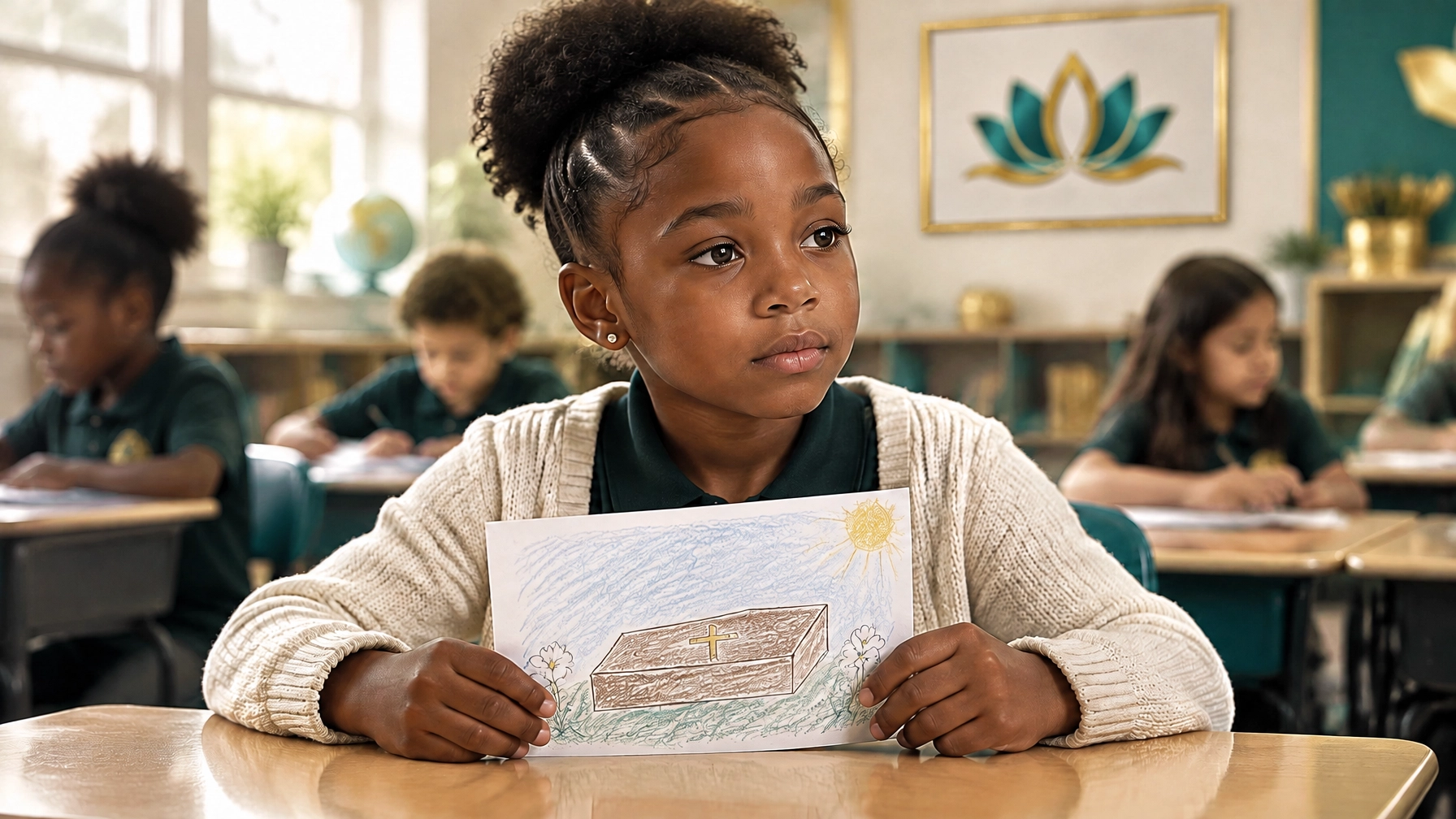
There is the second grader drawing a casket during art. The seventh grader whose grades fall off a cliff in October, and nobody asks why. The senior who does not walk at graduation because the person they were walking for is gone.
There is the child whose mother is incarcerated, carrying a loss the school has never named. There is no funeral leave for that child. No bereavement plan built into the school day. Just a desk, a bell, and the expectation to keep going.
Grief enrolls with them. It sits beside them in class. It follows them into the hallway. It shows up in the work they cannot finish and the words they cannot find.

Did you know?
Judi’s House/JAG Institute’s 2026 Childhood Bereavement Estimation Model estimates that about 1 in 11 U.S. children will experience the death of a parent or sibling before age 18. An American Federation of Teachers/New York Life Foundation survey found that 69% of teachers had at least one student lose someone close in the previous year, yet 93% of teachers reported never receiving bereavement training. Meanwhile, the American School Counselor Association reports a national student-to-school-counselor ratio of 372:1 for 2024–25, compared with its recommended 250:1. And an older Child Trends analysis, using 2011–12 survey data, estimated that 1 in 14 U.S. children had experienced parental incarceration; for Black children, the estimate was 1 in 9.
These figures come from different studies, years, and measures. Together, they point to the same reality: the math is not a failure of any one educator. It is proof the system needs outside help.
Read the Childhood Bereavement Estimation Model, the AFT/New York Life Foundation educator survey, ASCA’s counselor ratio data, and Child Trends’ report on parental incarceration.
The grief schools may not have words for
Some losses are widely recognized. Others are not.
A child can grieve a father who is incarcerated: a loss without a funeral, often surrounded by shame and silence. A child can grieve a caregiver while living in foster or kinship care. A child can miss the parent who is physically present but emotionally unavailable because of active addiction. A child can carry the sudden absence of a sibling who was killed.
These are forms of disenfranchised grief: real losses that receive little recognition, support, or language. A child may also be dealing with the loss of identity after trauma, a changed home, or the feeling that the people and routines they depended on are no longer steady. Parental incarceration is one of the potentially traumatic experiences discussed in Child Trends’ analysis of adverse experiences in childhood.
For many students, school is the most consistent adult structure in the week. It can become a place where they are seen, or another place where they must perform being fine.

Behavior is often grief wearing a disguise
Grief does not always look like tears. At school, it may look like falling grades, withdrawal, irritability, aggression, chronic absences, perfectionism, or risk-taking. It may show up as stomachaches and headaches, clinging, spacing out, refusing to talk about home, or hoarding food when life feels unpredictable.
The child who is acting out may be a child acting under the weight of something nobody has named.
That does not mean every behavior has one explanation, or that every sad student needs a clinical referral. It does mean you can pause before deciding a student is simply defiant, lazy, or “not trying.” You can ask what changed, what the child may be carrying, and which trusted adult can help.
If you are the student reading this: you are not broken because grief changes how school feels. If you are the adult who wants to help but does not know what to say, you do not need perfect words. You need a willingness to stay present.
When schools get it wrong, and how they can do better
A grieving student hears, “Just try harder.” A discipline response arrives before anyone asks what happened. An adult avoids the subject because they fear making the child more upset. Someone says, “You should be over it by now.”
A Mother’s Day craft goes home without anyone considering the student whose mother is incarcerated, or the student whose mother is gone.
No single moment defines a school. But small moments can compound. A child who feels unseen may disengage, miss school, or face discipline when they need support. The answer is not to shame educators. It is to equip them.
A grief-informed school can begin with practical steps:
- Establish a bereavement response plan for a death, a parent’s incarceration, and other significant losses.
- Identify a trained point person and make sure support does not rest on one overextended counselor.
- Give staff shared, human language: “I’m sorry. Tell me about them. I’m here.”
- Offer grief groups, practical re-entry support, and a referral path to professional or clinical care.
- Consider compassionate accommodations around funeral attendance, court dates, visitation, and return to school.
- Plan ahead for holidays, including Mother’s Day and Father’s Day.
- Train staff to recognize possible grief responses and distinguish them from defiance.
- Include families and kinship caregivers with respect, clarity, and care.

A grief-informed approach also makes room for caregivers and families navigating trauma. That includes women healing trauma, those seeking trauma support for women, and people who need mental health support for women in their communities. Children do not grieve in isolation from the adults who care for them.
As Chris Park, then president of the New York Life Foundation, said in the AFT survey release: “We can’t eliminate their grief journey, but maybe we can ease the path.” Schools can help ease that path.
AYANA’s Grief Method™ in a school setting
Acknowledge: Name the loss, including the invisible ones connected to incarceration, addiction, foster care, and family disruption. A child should never have to be the first person to say it out loud.
Yielding: Make room for emotion without rushing to fix or pathologize it. Not every sad student needs a referral. Every student deserves an adult who is not afraid of their sadness.
Articulation: Help students find words through journaling, memory work, conversation, or a trusted adult. Ask, “What do you wish people knew about them?”
Navigation: Offer practical support, predictable adults, thoughtful re-entry plans, and calm-down options that do not default to punishment.
Access: Connect students and families to trained staff, professional care, and community partners.
Grief support is not an add-on to academic achievement. It helps create the conditions in which a student can access learning. A student in survival mode may struggle to concentrate, attend, or connect. Grief-informed practice is not soft. It is preventative.
Principals, social workers, teachers: bring the professionals in
To the principal: You do not have to build this from scratch. Bring in a grief-informed professional to train your staff this school year. Start with one professional development session.
To the school social worker and counselor: You cannot carry 372 students alone. Equip the adults around the child, too. Ask for professional development resources and make the case using your school’s attendance, behavior, and discipline data.
To the teacher: You are often the first to notice a change. Ask your administrator for training. Learn four sentences: “I’m sorry. Tell me about them. I’m here.” Do not wait for a referral system to be the only way a student gets noticed.
To the dean and assistant principal: Make sure a grief response is part of the conversation before a student’s pain becomes a discipline referral.
To the district leader: Put grief-informed practice in your multi-tiered systems of support, attendance strategy, and crisis response plan.
Ayana Thomas Initiative LLC offers staff professional development, grief-informed leadership consultation, and student and family grief support programming for schools and youth-serving organizations. This is a partnership, not a purchase.
Bring us in once and your building will know what to do the next time.
A grieving child is not a broken student. And a school is not a failure because it did not know. But now you know. And knowing is where a difference begins.
If you have been carrying a loss quietly in a building where no one asked, you were never asking for too much. You were asking for someone trained to notice.
That is why this work belongs in the school system. Not as an extra program. As a standard of care.

Sources and further reading
- Judi’s House/JAG Institute: Childhood grief in the U.S.
- AFT/New York Life Foundation: “Grief in the Classroom” survey
- American School Counselor Association: School Counselor Roles & Ratios
- Child Trends: Five Million U.S. Children Have Had a Parent Incarcerated
- AYANA’s Grief Method™
- Services for organizations | Contact
Contact
Ayana Thomas Initiative LLC
Website: www.grievingbacktolife.com
Email: ayana@grievingbacktolife.com
Phone: 862-240-3260
Grief-informed training and consultation for schools and youth-serving organizations.
Dr. Ayana Thomas, Grief Practitioner AKA The Grief Doctor
We will always give grief a voice.