Nov 17, 2026
Grieving Someone Who's Still Alive: The Loss No One Calls Grief
You can grieve someone who is still alive, and your grief deserves to be seen.

You can grieve someone who is still alive, and your grief deserves to be seen.
Maybe dementia has changed the person you love, one conversation and one familiar detail at a time. Maybe addiction, estrangement, or incarceration has taken someone out of your daily life. Maybe you miss the parent who was never emotionally there, or the person someone used to be before life changed them.
The person is still living. The relationship may still exist. And yet something you knew, needed, or hoped for is gone.
That pain is real. You do not need a death certificate to name it.
When love and loss share the same room
You might find yourself reaching for the phone, then remembering that the call may not come, or may not feel the way it once did. You might miss who someone was while caring for who they are now. You might feel relief after setting a boundary, then sadness that the boundary was necessary.
Contradictory feelings do not make your love false. They make you human.
This kind of sorrow is often described as ambiguous loss: a loss without a clear ending. The person may be physically absent but always on your mind, as in incarceration or a missing parent. Or they may be physically present while dementia, addiction, or a profound change in the relationship makes them feel far away.
There may be no funeral. No card. No shared language for what has changed.
So you keep showing up. You answer questions. You make meals. You hope. You set limits. You carry a profound void in the heart while the world assumes nothing has happened.
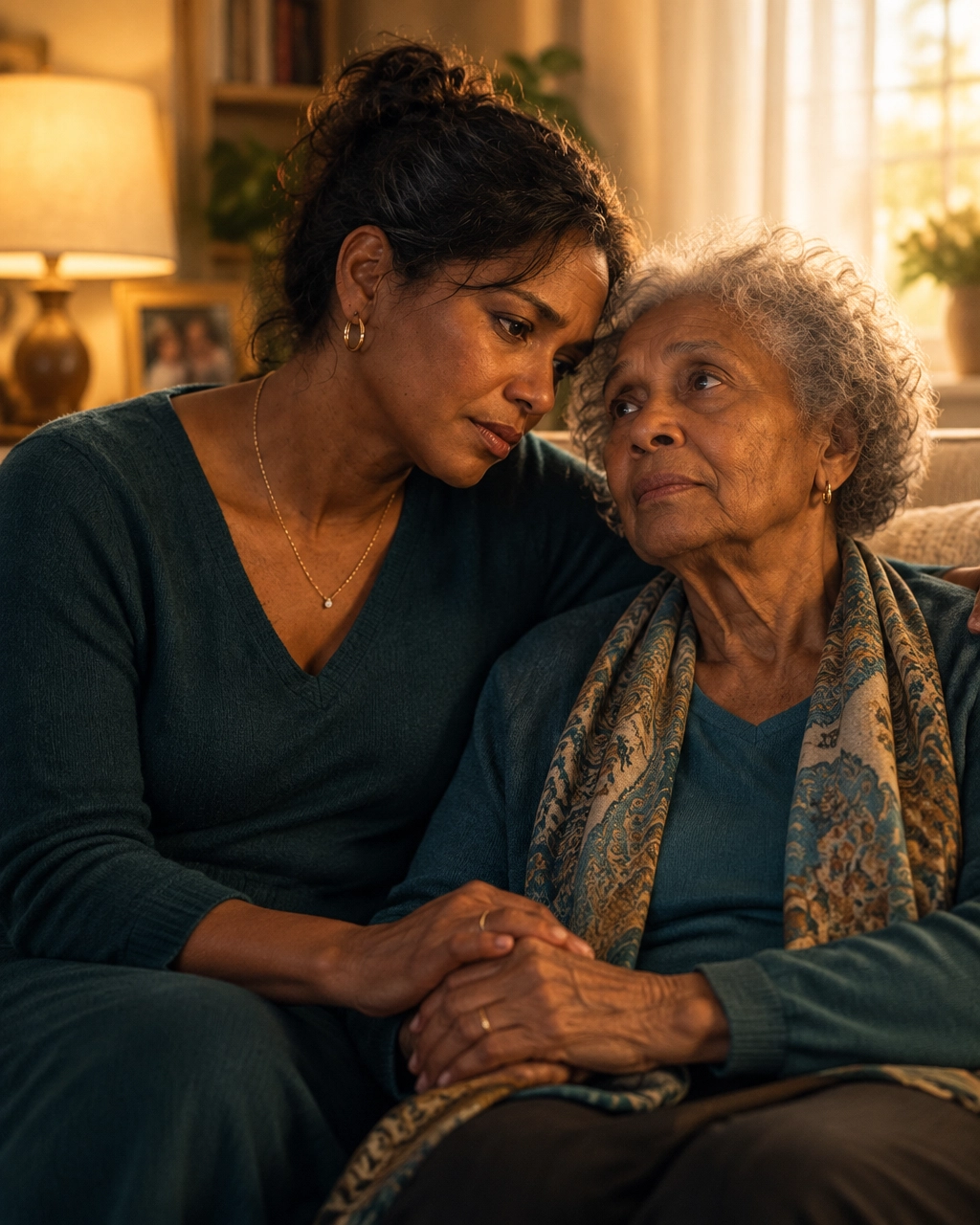
The losses others may not see
If you are supporting someone with dementia, you may miss the conversations, shared memories, and future you pictured together. You can love the person in front of you and ache for the ways your relationship has changed.
If someone you love is incarcerated, you may grieve everyday closeness: meals, birthdays, school mornings, the ordinary moments that make a family feel like a family. If you are justice-impacted, you may also be grieving time, freedom, identity, or the people and routines you left behind.
If addiction or estrangement is part of your story, you may grieve the relationship you hoped you could have. You may miss someone, worry about them, feel angry, and still need distance to protect your safety and well-being. You can care about someone without accepting harm. Healing does not require you to reconcile, reopen contact, or pretend the past was different.
Perhaps the person who changed is you. You survived what you had to survive. Now you are meeting a self shaped by experiences you never chose. That, too, can bring grief.
Our work at The G.R.I.E.F. Initiative™ recognizes grief beyond death, including loss connected to trauma, incarceration, family, identity, and life disruption. We hold space for ALL women navigating invisible losses, with a specialized focus on women impacted by the criminal legal system. You do not have to prove that your pain is “serious enough” to deserve care.
Did you know?
Did you know? AARP and the National Alliance for Caregiving estimated that 63 million U.S. adults, nearly one in four, provided ongoing care to an adult or child with a medical condition or disability during the previous year, according to their Caregiving in the U.S. 2025 report.
That figure measures caregiving, not ambiguous loss, and it does not tell us how many people are grieving a relationship that has changed. But it points to how many people are tending to someone they love through difficult, ongoing changes. Many do so while carrying emotions that are hard to explain and even harder to share.
If you recognize yourself in this, you are not alone. You are not failing because your grief does not follow a neat timeline.
Our Mission: Make room for the truth
Our mission is to create trauma-informed, judgment-free spaces where you can name grief in all its forms and move forward without erasing your story.
We do not ask you to “get over it.” We do not demand a tidy ending. We believe grief does not need to be fixed; it needs to be witnessed.
As you navigate uncharted territory, the Mayo Clinic Health System’s guide to ambiguous grief offers additional context. And our AYANA’s Grief Method™ offers a gentle pathway for listening to what your grief may be asking for. It is not a set of steps you must complete in order. Take what supports you, at a pace that feels possible.
Acknowledge
Begin by telling yourself the truth: Something has changed, and I am grieving it.
You might name the missed calls, the changed memories, the lost routines, or the future that no longer feels certain. Acknowledgment does not mean giving up hope. It means making room for what is true today.
Yielding
Yielding is not surrendering your love, or your boundaries. It is loosening the fight against feelings you cannot simply switch off.
You may feel tender one day and frustrated the next. You may want closeness and need space. Let feelings come and go without turning them into a verdict on your character.
Articulation
Give the loss words. You might write a letter you never send, talk with someone you trust, or say aloud, “I miss who we were.”
You can hold more than one truth: I love you. I am hurt. I need safety. I wish things were different. Naming your reality can help the storm feel less like something you must survive in silence.
Navigation
There is no single map for this kind of grief. Look for small, steady ways to move through today: a grounding breath, a trusted friend, a meaningful ritual, a support group, or a boundary that protects your peace.
When dementia is involved, care can mean honoring a moment of connection without demanding that it become the past again. When addiction or estrangement is involved, care may mean seeking support while maintaining distance. When incarceration has separated a family, care may include finding safe, realistic ways to stay connected. Your next step belongs to you.
Access
Healing should not depend on carrying everything alone. Access might mean grief-informed support, a culturally responsive space, practical help, or someone who can listen without telling you to move on.
If you are a family member, caregiver, or justice-impacted woman, you deserve support that sees the whole story, not only the crisis, the diagnosis, the sentence, or the role you play for others. Explore individual grief counseling and other services when you are ready.

Your grief has a place here
There may be no clean goodbye. There may be no moment when every question is answered and every feeling settles.
Still, you can learn to live with the uncertainty without letting it take your whole life. You can miss someone and make room for your own needs. You can love someone and grieve what the relationship cannot offer right now. You can honor who they were, who you are, and the truth of what has changed.
You are allowed to grieve someone who is still alive.
Grief is hard. Finding support doesn’t have to be. If you are considering reaching out, you are welcome to contact us when you are ready.
We will always give grief a voice.
Ayana Thomas Initiative LLC
Website: www.grievingbacktolife.com
Email: ayana@grievingbacktolife.com
Phone: 862-240-3260
About the author
Dr. Ayana Thomas, Grief Practitioner AKA The Grief Doctor, brings over 20 years of experience at the intersection of human services, grief support, and justice-impacted systems. As the founder of Grieving Back to Life, Ayana’s work centers grief beyond death, addressing loss tied to trauma, incarceration, identity, and life disruption through trauma-informed, dignity-centered care.
Her approach combines lived experience and professional practice, creating spaces where grief is witnessed, not fixed, and healing unfolds at a human pace.
Gentle next step
If you’re considering reaching out, you’re welcome to contact us when you’re ready
Recent blogs