Awareness
Oct 20, 2026
The Grief Nobody Warns You About, Deeper: The Hard Questions Every Woman Must Ask in Dating
If you are a woman navigating dating, we help you name the grief, honor your needs, and find your way back to yourself.
If you are a woman navigating dating, we help you name the grief, honor your needs, and find your way back to yourself.
The responses to The Grief Nobody Warns You About: What Dating Does to a Woman’s Heart made one thing clear: you are carrying questions that deserve more than a passing answer.
This is not about becoming suspicious of everyone you date. It is not about punishing yourself for hoping. It is about meeting your hope with honesty, and remembering that your questions matter, too.
Because sometimes the grief of dating is not only what someone does. It is what you keep asking yourself after the silence, the mixed signals, the promises that never become a plan.
Let’s go deeper.
Tier 1: The questions you ask yourself
Am I dating him, or the potential I see in him?
Potential can feel like promise. But potential is not a pattern, and imagining who someone could become can keep you waiting past what their actions are showing you.
Ask yourself: What is happening now, not what might happen if he changes?
You can believe in someone’s capacity without making it your responsibility to wait for it.
Am I trying to be chosen, or trying to be known?
There is a difference between wanting a real connection and working to win approval. If you are monitoring every word, hiding your needs, or trying to become the kind of woman you think he will keep, pause.
Are you letting him meet the real you, or auditioning for the role of “easy to love”?
You deserve to be known, not merely selected.
What am I hoping he fixes, and could I survive it if he never does?
Maybe you hope his attention will quiet the ache of an old rejection. Maybe you want his commitment to prove that you are worthy of staying for. Maybe you want this relationship to repair the part of you that feels abandoned.
Those hopes do not make you foolish. They make you human. But your worth cannot safely rest in someone else’s hands.
What am I asking this relationship to heal that needs care beyond this relationship?
You can want love and seek support for your healing at the same time.
Am I performing, or am I present?
Part 1 named the pressure to perform desirability. Now ask what you edit out to stay lovable.
Do you hide your opinions? Your history? Your boundaries? Your need for consistency? Do you call yourself “chill” when you are anxious, or “low-maintenance” when you are swallowing disappointment?
What parts of yourself go quiet when you want someone to stay?
A relationship that requires your disappearance is not the same as a relationship that makes room for you.

If my best friend described this relationship to me, what would I tell her?
Would you tell her to trust the promise, or notice the pattern? Would you ask her to keep waiting, or remind her that confusion is information too?
Sometimes compassion becomes clearer when we offer it to someone we love. Try turning that same gentleness toward yourself.
Am I afraid of being alone, or afraid of starting over again?
Both fears can be real. Starting over may feel exhausting, especially after loss, trauma, divorce, or a season in which you have already had to rebuild.
But staying in a relationship that diminishes you does not always spare you from loneliness. Sometimes, it makes you lonely beside someone.
What did my last heartbreak teach me about myself, not about him?
Not: How can I make sure no one ever hurts me again? That promise is impossible.
Instead ask: What did I learn about what I need, what I tolerate, and when I stop listening to myself?
Grief healing is not about blaming yourself for what someone else chose. It is about gathering what you know now and carrying it forward with care.
Tier 2: The questions you ask him
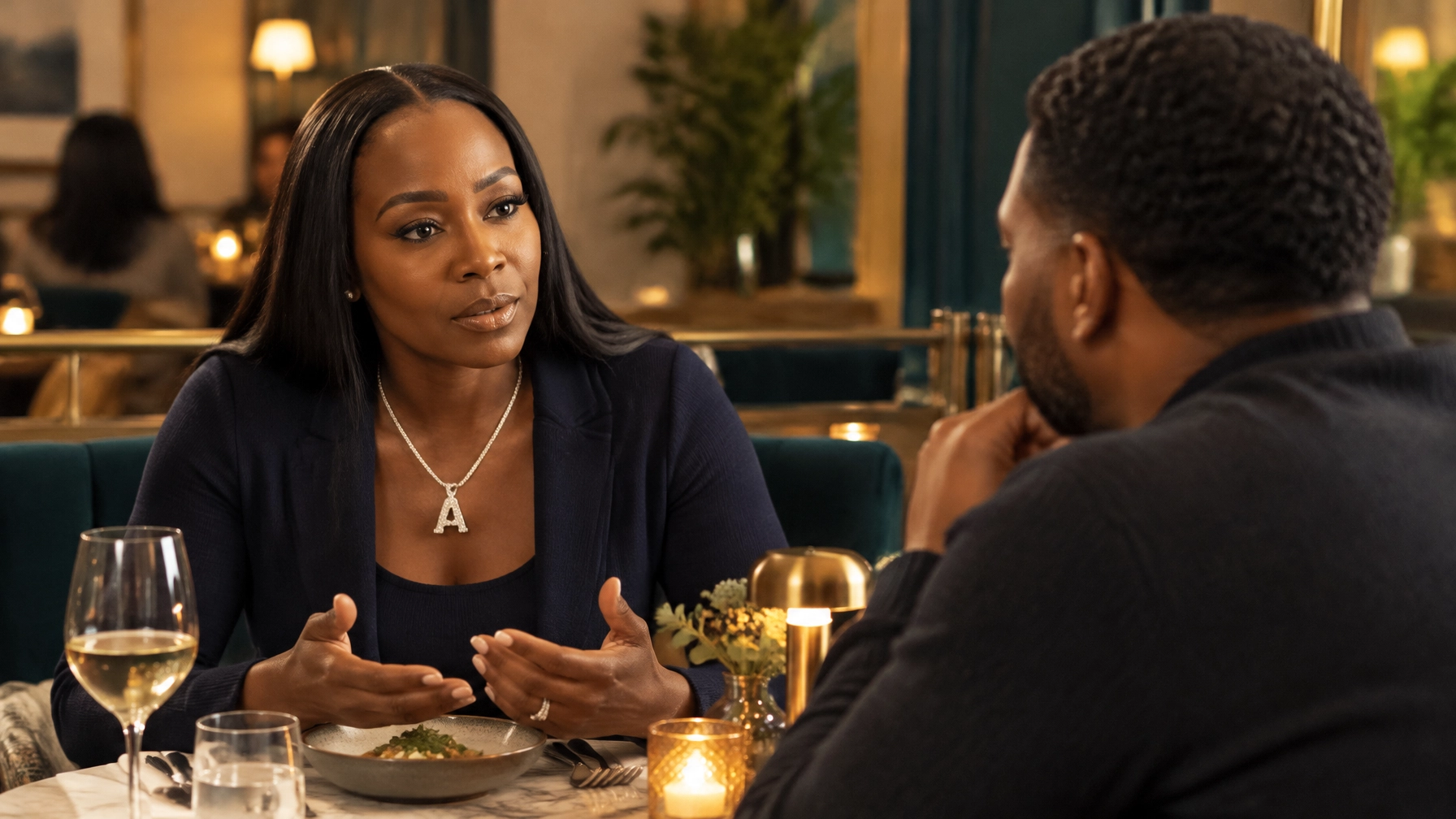
Asking directly is not a test. It is a way to understand whether your intentions and actions have room to meet.
“What are you looking for, honestly?”
If the answer is vague, what happens next? Do you ask for clarity, or translate “I’m just seeing what happens” into the commitment you hope will arrive?
You do not have to demand a promise on a first date. You can still be honest about what you want and pay attention to whether his answer fits your needs.
“What did your last relationship teach you?”
Listen for reflection, not a perfect speech. Can he describe his part in what happened? Can he talk about an ex without turning her into a caricature? Does he name something he learned, or only what someone did to him?
The point is not to investigate his past. It is to notice how he makes meaning of it.
“How do you handle it when you don’t get your way?”
Pay attention to what he says, and how he responds to being asked. Does disagreement lead to conversation, or punishment? Can he hear “no” without pressuring, sulking, or withdrawing affection?
“What does accountability look like in your life?”
You might ask for a real example: “Can you tell me about a time you realized you hurt someone and what you did next?”
Then notice whether his actions offer evidence. Accountability is not only an apology. It is taking responsibility and making a sincere effort to behave differently.
“What are you building, and may I see the blueprint?”
Words can describe a beautiful future. Patterns show whether someone is building toward it.
Does he follow through? Make space for you? Communicate when plans change? Treat your time with consideration?
The blueprint is in the behavior.
And here is the hard truth: a man irritated by clarity was never going to be clarified by time. You are not difficult for asking a sincere question. The right person may not share every answer, but they can meet your honesty with respect.
Tier 3: The questions the relationship answers without words
Some of the clearest answers arrive through repeated behavior, not a single good date or one difficult week.

Do I feel safer or smaller around him? Safer does not mean never nervous. It means you can speak, disagree, and be yourself without fearing humiliation or retaliation.
Does his consistency match his words? Watch the pattern over time. Promises matter less when they repeatedly fail to become action.
What happens when I set a boundary? Does he respect it, or use distance, guilt, or pressure to make you regret having one? A boundary is not a demand that someone become a different person. It is information about what you will participate in.
Who am I becoming in this relationship: more myself, or less? Are you more connected to your values, friendships, and voice? Or are you increasingly editing yourself to keep the peace?
Your body may register tension before you have language for it. That does not mean every uneasy feeling is proof of danger. It does mean your feelings deserve attention, not automatic dismissal.
Did you know?
In a Forbes Health/OnePoll survey of U.S. dating-app users, 78% reported feeling emotionally, mentally, or physically exhausted by dating apps; among women, the figure was 80%. The survey describes reported exhaustion, not a diagnosis, but it helps explain why dating can feel like another demand on an already tired heart. (Forbes Health)
In research on online dating choices, Pronk and Denissen found that encountering more options could increase a rejection mindset: across their studies, participants became more likely to reject potential partners as they considered more options. That does not mean every app user responds the same way. It does offer context for how a crowded dating landscape can make connection feel uncertain and exhausting. (Pronk & Denissen, Social Psychological and Personality Science)
And a 2026 qualitative study of 14 young adults’ experiences of situationships describes how ambiguous boundaries and imbalanced emotional investment can cause distress, especially when people feel their pain is dismissed because the relationship was never formally defined. The sample is small, but the experiences point to a truth many recognize: uncertainty can hurt, even without a label. (Anderson & Phillips, Social Sciences)
You are not weak for feeling worn down. The emotional weight of dating deserves care.
Tier 4: The question under every question
Why do you avoid asking what you need to know?
Sometimes, because you fear that the answer will end your hope. So you wait. You soften the question. You accept another “we’ll see,” hoping time will turn uncertainty into security.
But the question that costs you a relationship may be saving you from a relationship that would cost you years.
Asking does not guarantee that you will avoid heartbreak. It gives you the chance to meet reality earlier, with more of yourself intact. The grief of dating is often the grief of unanswered questions finally answered too late.
AYANA’s Grief Method™: Make room for the hard questions
Acknowledge: Name what you are afraid to hear. “I’m scared he doesn’t want what I want.”
Yielding: Let the fear exist without letting it make every decision. Fear can sit beside you; it does not have to drive.
Articulation: Write your questions down. Practice saying them aloud. Your voice may feel steadier after you have heard yourself speak.
Navigation: Define your dealbreakers before loneliness negotiates them away. Ask early (date two, not year two) when it feels appropriate and safe.
Access: Invite trusted friends, community, or grief-informed support into the process. You deserve people who will listen without shaming you or deciding for you.
This is part of trauma support for women and mental health support for women: making space for the whole person, including the parts that are afraid, hopeful, guarded, and still learning to trust. For ALL women, including women carrying disenfranchised grief, loss of identity after trauma, or the weight of starting over, clarity can be a compassionate tool for resilience after loss. Explore our grief-informed services if you would like support.

Audre Lorde writes, “Caring for myself is not self-indulgence, it is self-preservation, and that is an act of political warfare.” Asking the question is one way to care for the woman you are becoming.
The hard question is not, “Will he choose me?”
It is, “Will I choose me?”

Women who ask hard questions are not difficult. They are done auditioning.
Clarity is an act of self-respect. It is grief-prevention, not a promise that you will never hurt, but a way to stop abandoning yourself to preserve a hope that is not being met.
The woman who asks hard questions is not hard to love. She is hard to lose, and that is the point.
Ayana Thomas Initiative LLC
Website: www.grievingbacktolife.com
Email: ayana@grievingbacktolife.com
Phone: 862-240-3260
Dr. Ayana Thomas, Grief Practitioner AKA The Grief Doctor
About the author
Dr. Ayana Thomas, Grief Practitioner AKA The Grief Doctor, brings over 20 years of experience at the intersection of human services, grief support, and justice-impacted systems. As the founder of Grieving Back to Life, Dr. Thomas’s work centers grief beyond death, addressing loss tied to trauma, incarceration, identity, and life disruption through trauma-informed, dignity-centered care.
Her approach combines lived experience and professional practice, creating spaces where grief is witnessed, not fixed, and healing unfolds at a human pace.
Gentle next step
If you’re considering reaching out, you’re welcome to contact us when you’re ready