Awareness
Sep 15, 2026
Burnout or Disenfranchised Grief? 7 Signs Your Loss Is Hiding in Plain Sight
Women carrying invisible losses deserve grief-informed support: not another label that makes their pain disappear.
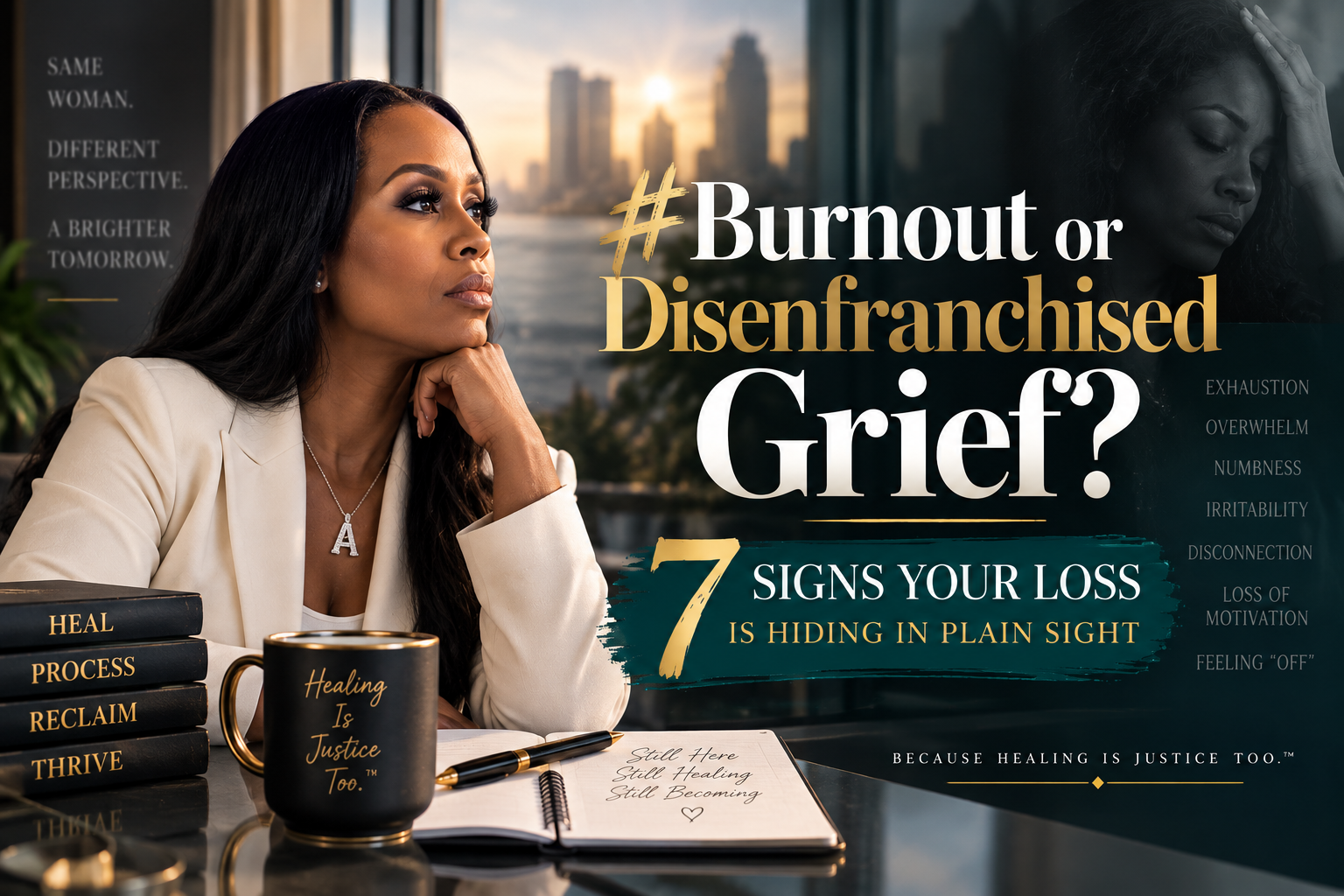
Women carrying invisible losses deserve grief-informed support: not another label that makes their pain disappear.
A viral post this week blurred the line between burnout and disenfranchised grief. The distinction matters.
Burnout describes deep emotional exhaustion, detachment, and the feeling that you can no longer keep producing, caring, or performing. Disenfranchised grief names the pain underneath when your loss is real: but no one recognizes it, validates it, or gives you permission to mourn.
Sometimes, it is both.
You may be exhausted from work. But you may also be grieving the life you lost.
You may be overwhelmed by caregiving. But you may also be grieving the relationship, identity, safety, freedom, or future that changed beyond recognition.
You may not be lazy, unmotivated, or too sensitive.
You may be carrying grief no one taught you how to name.
Burnout or Disenfranchised Grief?
According to grief scholar Kenneth Doka, disenfranchised grief is grief that is not openly acknowledged, socially supported, or publicly mourned. It can follow a death, but it can also follow incarceration, estrangement, trauma, chronic illness, divorce, job loss, community violence, or the loss of who you once were.
Burnout often asks, “How much have you been carrying?”
Disenfranchised grief asks, “What have you lost: and why has no one witnessed it?”
Both can leave you depleted. Both can affect your sleep, focus, relationships, and body. But grief adds a hidden layer: the loneliness of hurting without feeling allowed to hurt.
Here are seven signs your loss may be hiding in plain sight.
1. Rest does not restore you
You sleep.
You take a day off.
You cancel plans.
You sit quietly and try to do nothing.
Still, you wake up tired.
Rest may reduce immediate exhaustion, but it does not always reach the profound void in the heart created by unresolved loss. If your nervous system remains on alert, your body may be asking for more than a break.
It may be asking for acknowledgment.
When rest does not restore you, the answer may not be another productivity strategy. It may be grief healing that helps you understand what your body and spirit are still carrying.
You are not failing at rest. You may be resting beside a wound that has never been witnessed.

2. You are grieving a life nobody recognizes
People may see you functioning.
They see you going to work. Parenting. Showing up. Meeting deadlines. Smiling when necessary.
They may not see that you are grieving the version of life you expected to have.
You may be grieving:
- The family connection that changed.
- The freedom you lost.
- The relationship that ended without closure.
- The identity you had before trauma.
- The future you planned but can no longer reach in the same way.
- The person you had to become in order to survive.
This is loss of identity after trauma. It is grief after incarceration. It is grief after being labeled, judged, or reduced to your worst chapter.
When people say, “At least you are still here,” they may not understand that being here can still feel incredibly hard.
Your loss does not need to look familiar to be valid.
3. Small things feel overwhelming
A text message feels like a demand.
A simple decision feels impossible.
A missed appointment feels like a personal failure.
The laundry piles up. The dishes wait. The smallest interruption opens a floodgate.
This does not mean you are incapable. It may mean your emotional capacity is already full.
When grief has nowhere to go, ordinary responsibilities can feel like stones added to an already heavy backpack. You are not only responding to today. You may be responding to yesterday, last year, and every loss you were expected to carry silently.
You are navigating uncharted territory without a map. With the right support, even overwhelming days can become manageable one step at a time.
4. You feel disconnected from yourself
You look in the mirror and recognize your face, but not your life.
You make decisions based on survival. You keep moving because stopping might bring the storm closer.
You may feel numb. Detached. Far away from your own emotions.
You may wonder:
Who am I now?
What do I want?
What parts of me are still here?
Disenfranchised grief can interrupt your sense of identity and belonging. It can make joy feel unfamiliar. It can make hope feel dangerous.
But numbness is not the absence of a self. It is often protection.
The self you are searching for may not be gone. She may be waiting for safety, language, and room to return.
5. Irritability or numbness replaces sadness
Grief does not always look like tears.
Sometimes, tears become the constant dialogue of the body: even when your eyes stay dry.
Grief may look like:
- Irritability.
- Anger.
- Emotional shutdown.
- A short temper.
- Avoiding people.
- Feeling nothing when you expected to feel everything.
You may be called difficult when you are depleted. You may be called cold when you are protecting yourself. You may be called angry when your heart is exhausted from carrying what it cannot say.
Your reactions deserve curiosity before judgment.
There is information inside the anger. There is a story beneath the numbness. Naming that story can begin to guide you through the storm.
6. You cannot concentrate like you used to
You reread the same paragraph.
You walk into a room and forget why.
You lose track of conversations. You struggle to make decisions. You experience what many people call “grief brain.”
Difficulty concentrating can happen with burnout, depression, anxiety, trauma, and unresolved grief. It is not a character flaw.
Your mind may be using energy to process a loss that has never had language. It may be scanning for danger. It may be trying to protect you from another disappointment.
This is why trauma support for women must address more than behavior. It must make room for the story beneath the behavior.
Your focus can return. Your clarity can return. Healing does not erase what happened, but it can help you feel present in your own life again.
7. You feel guilty for needing help
You tell yourself other people have it worse.
You minimize the loss.
You apologize for your emotions.
You feel guilty for resting, grieving, asking questions, or needing support.
This is one of the clearest signs that your grief may be disenfranchised. Somewhere along the way, you learned that your pain required proof.
But you do not need a death certificate to justify grief.
You do not need permission to mourn the loss of freedom, family, identity, safety, time, trust, or self-worth.
As Maya Angelou reminds us, “You may encounter many defeats, but you must not be defeated.”
Needing help does not make you weak. It makes you human. Resilience after loss is not pretending you were never hurt. It is learning how to heal without abandoning yourself.
Did you know?
Did you know that more than 5 million children in the United States have had a parent in jail or prison at some point in their lives? The Annie E. Casey Foundation reports that parental incarceration affects children through disrupted routines, separation, stigma, financial strain, and changes in emotional security.
Did you know that an estimated 2.7 million children have a parent currently incarcerated: about 1 in 28 children? These children may be grieving every day while receiving little acknowledgment or support.
Did you know that approximately 1.2 million women were under criminal legal supervision in 2016, including more than 1 million women on probation or parole? This figure, drawn from Bureau of Justice Statistics data and reported by the Equal Justice Initiative, illustrates the scale of loss carried by women navigating incarceration, probation, parole, reentry, and system involvement.
More recent data from The Sentencing Project reports that more than 1 million women remain under the supervision of the criminal legal system.
These are not just numbers.
They represent mothers missing birthdays. Women rebuilding after years of separation. Families adapting to empty chairs. People grieving freedom, connection, identity, and time.
This is why women healing trauma need care that sees the whole story.
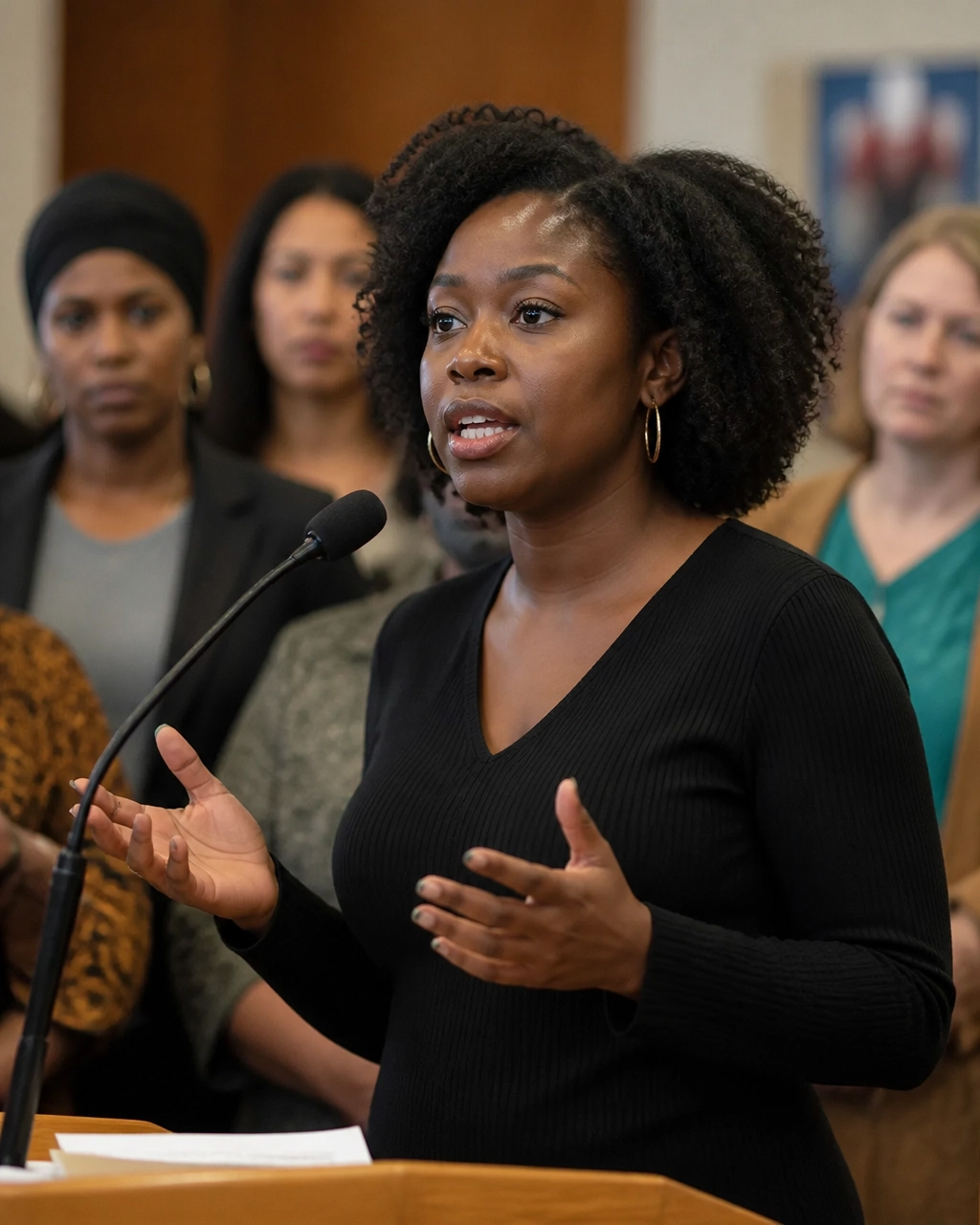
Our Mission: Give grief a voice
Our Mission is to help you name the losses that have been minimized, hidden, or misunderstood.
At Ayana Thomas Initiative LLC, we believe grief exists beyond death. We recognize the grief connected to incarceration, trauma, identity, family separation, reentry, and life disruption.
Our work through Grieving Back to Life creates space for ALL women: including women directly impacted by the criminal legal system: to process loss, build healthy coping skills, strengthen resilience, and rediscover hope and purpose.
We do not rush your grief.
We do not shame your survival responses.
We do not reduce you to a diagnosis, a record, a mistake, or a difficult season.
We help you understand what your pain is trying to communicate. We help you build a bridge from survival toward healing.
And we believe healing can happen at a human pace.
Time alone does not heal what has never been witnessed
Time can create distance.
Time can change circumstances.
But time alone does not heal what has never been witnessed.
If you recognize yourself in these signs, consider speaking with a grief-informed professional who understands loss beyond death. You do not have to explain everything perfectly. You can begin with one sentence:
“Something in me is hurting, and I do not know what to call it.”
That is enough.
Contact us to explore grief support, individual counseling, organizational support, or healing after incarceration.
Grief is hard, finding help doesn’t have to be.
Ayana Thomas Initiative LLC
Website: www.drayanathomas.com
Email: ayana@grievingbacktolife.com
Phone: 862-240-3260
About the author
Dr. Ayana Thomas, Grief Practitioner AKA The Grief Doctor, brings over 20 years of experience at the intersection of human services, grief support, and justice-impacted systems. As the founder of Grieving Back to Life, Ayana’s work centers grief beyond death, addressing loss tied to trauma, incarceration, identity, and life disruption through trauma-informed, dignity-centered care.
Her approach combines lived experience and professional practice, creating spaces where grief is witnessed, not fixed, and healing unfolds at a human pace.
Gentle next step
If you’re considering reaching out, you’re welcome to contact us when you’re ready